

- Jul 22, 2024
9 Questions To Ask Before Installing Cable Railing
-
Share:
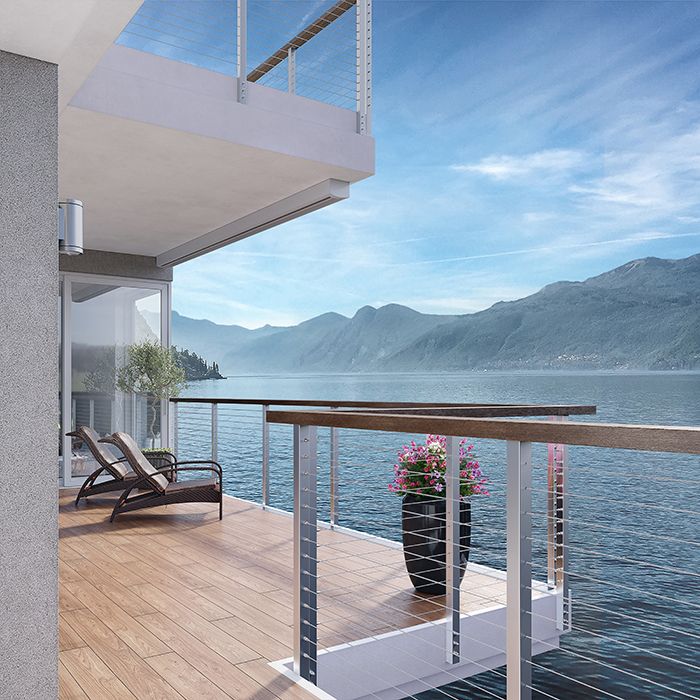
Photo Source: Bezdan
It's easy to see how anyone could get swept up in the cable railing trend. Cable is a beautiful railing solution for indoors or outdoors. It is incredibly diverse in its design applications, working just as well in a nautically inspired summer cottage or cabin as it can in a downtown industrial-chic loft. There are infinite customization possibilities for every project.
Before starting on your project, take a moment to review our customer service team's answers to the top most frequently asked cable railing installation questions they've been receiving over the last decade. Planning will make for a smoother installation with fewer challenges and a better final product.
1. Are Horizontal Cable Railings Allowed in Canada?
Recent building code adoptions in Canada have lifted restrictions on installing horizontal style railings, opening the door to greater design freedom for guardrails including cable railing. You'll need to take into account if building codes in your region will allow horizontal railing infill. In Canada, more and more jurisdictions are adopting the 2015 National Building Code (NBC). The NBC states the use of ornamental guards will now be permitted in a location where they protect a level located 4.2 metres or less above the adjacent level. This means that cable railing is now an acceptable ornamental railing infill. Codes will vary by region, so we always suggest to consult your local building department or licensed engineer regarding code compliance before starting your project.
2. What Are The Framework Requirements for Cable Railing?
A key factor in any successful cable rail application is always the attachment of the post to the deck, floor or stairs. Since hundreds of pounds of tension are being applied to end posts using cable railing, posts must be substantial enough to handle the tension. Substantial end posts are necessary to prevent the posts from bending under the cable tension. If the post material is not strong enough to withstand tension, it may cause the post to fail or bow and the cables to sag.
For wood, a minimum 4” x 4” nominal end post is generally required. For stainless steel, a minimum 2” x 2” post with a ¼” wall thickness is recommended. Refer to Bezdan Cable framework, fitting and tool guide for wood or metal applications here .
.
A top rail is always necessary for structural integrity when building a railing with cable infill. A top rail should always be installed prior to the infill and in a way that allows the top rail to absorb and deflect the pressure applied when cable is tensioned. It is best practice to secure top rails between the post rather than simply fastening the rail on the top of the post.
A complete railing will include 11 – 14 rows of cable depending on post height, framework construction, and cable spacing. We recommend a three-inch spacing between rows to comply with code requirements. The cable should be supported in some manner at least every 48" along its run to keep the cable rung from deflecting beyond 4". Intermediate posts, other than those that are structurally necessary, can be thin metal cable braces with holes for the cables to pass.
You'll also need to consider whether your application is for a level deck, patio, or for stairs.
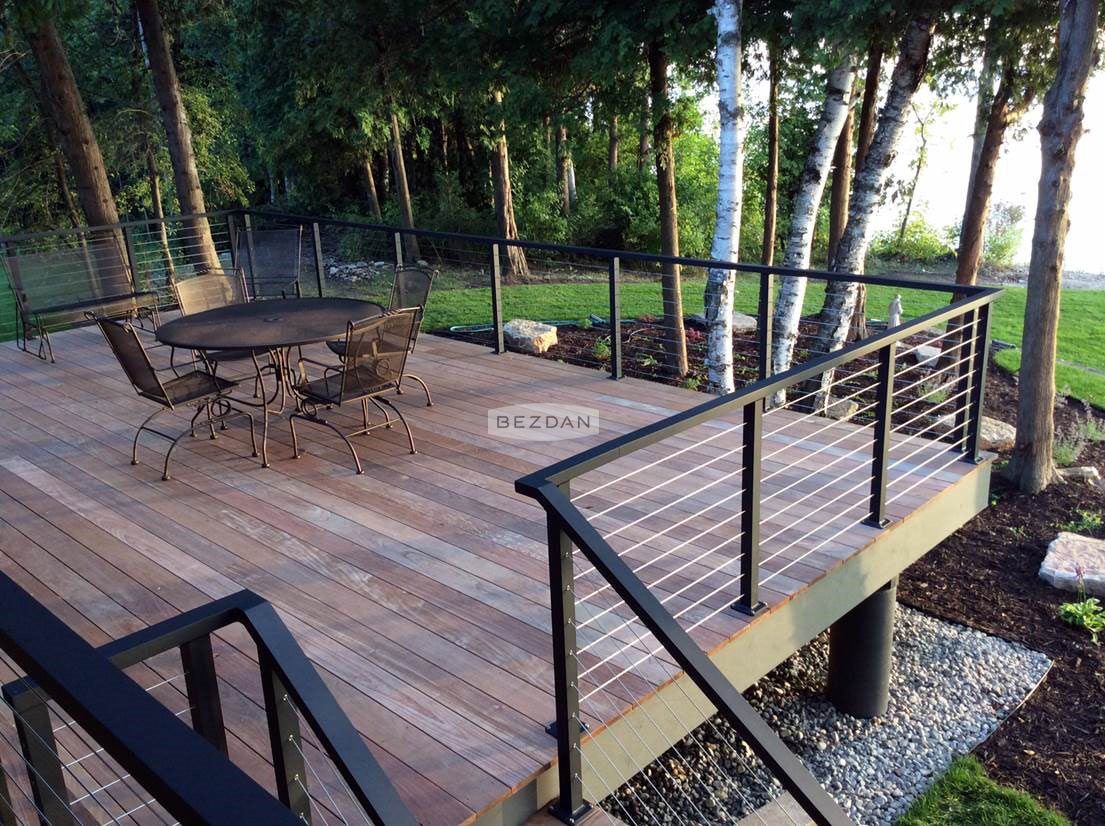
Photo Source: Bezdan
3. Should I Use Metal or Wood Posts for Cable Railing?
When selecting cable components, the framework material will determine which styles of cable end fittings will be available to you. The framework material is referred to as the mounting substrate for cable fittings. Metal and wood posts are the most common materials used in framework construction.
If you're doing a renovation, you might be thinking of keeping or using some or all of the current framework. There are cable fittings that can secure to a concrete wall or surface, like the side of a house or existing structure. Buying individual components or à la carte offers the flexibility to choose the fittings you need by the mounting substrate, ideal for mixed material frameworks.
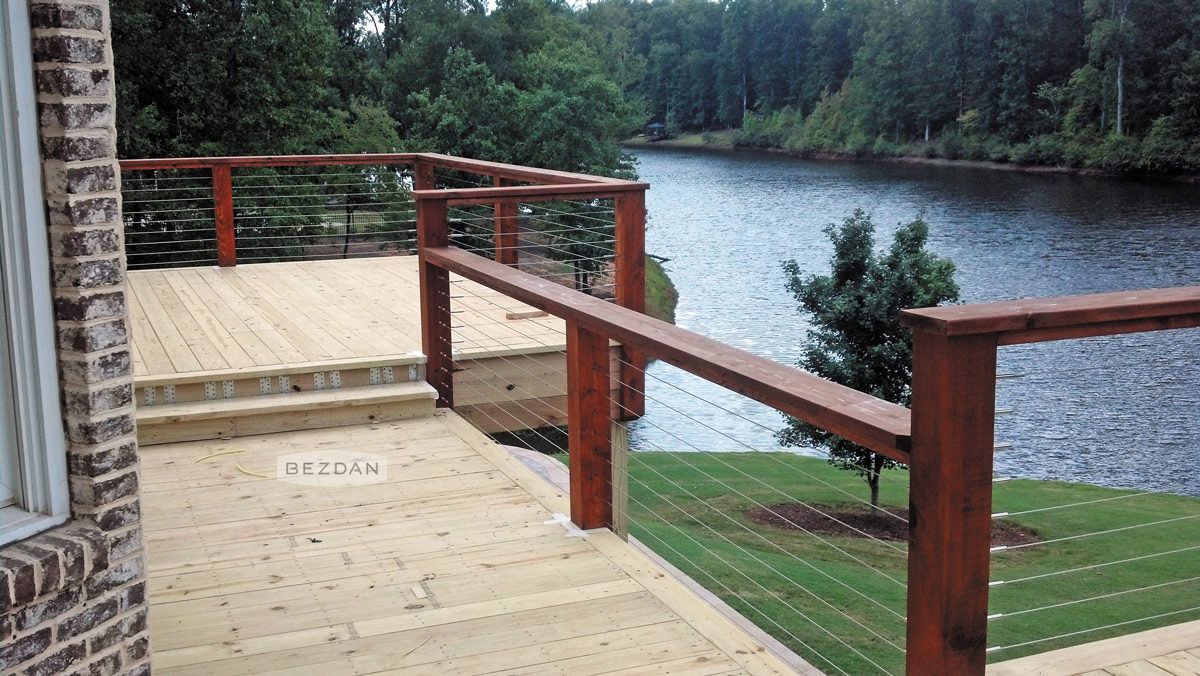
Photo Source: Bezdan
4. Where Should I Start When Measuring For Cable Railing?
When planning for cable railing, you’ll want to consider the length of each section. A section or run of cable can be straight or, in some instances, include a corner. The longer the section you have, the fewer components needed, the lower the overall cost. That said, remember that each run of cable requires at a minimum a tensioning and non-tensioning fitting function.
5. Is Cable Railing Expensive?
When you consider everything that stainless steel cable railing provides you—clear views, an installation by hand with simple tools, corrosion resistance, low maintenance requirements—it is indeed a cost-effective solution for residential patios, decks, and stairs alike.
The right cable railing components provide exceptional design and function and are easy to install, ensuring you deliver a high-end result that is safe and beautiful.
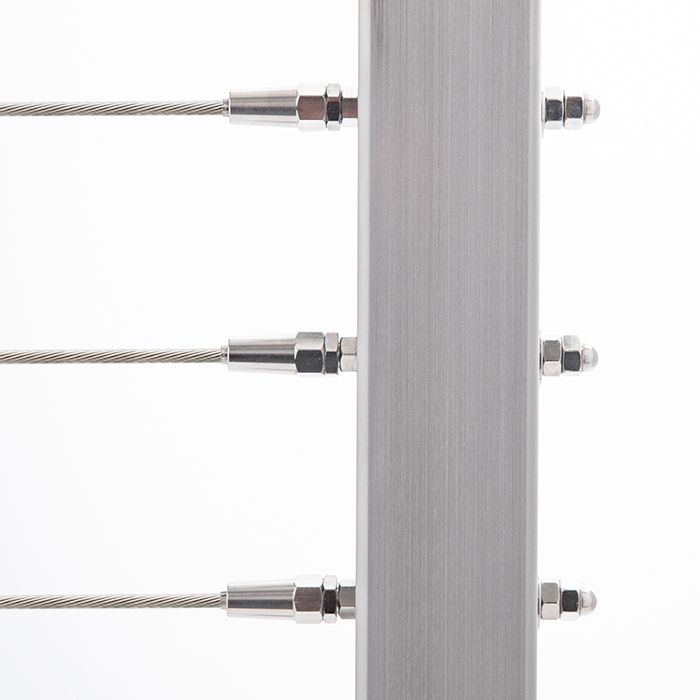
Photo Source: Bezdan
6. What's The Difference Between Through-Post And Surface Mount Cable Railing Fittings?
Through-post cable railing fittings are nearly invisible, passing through the post and securing to the backside. The result is a minimalist look with little to no visible hardware, ideal for maximizing views.
Meanwhile, a surface mount cable fitting option offers an exposed hardware look that can create a marine-inspired or contemporary style. The components are attached to the inside of the post, which is helpful when the backside is not accessible.
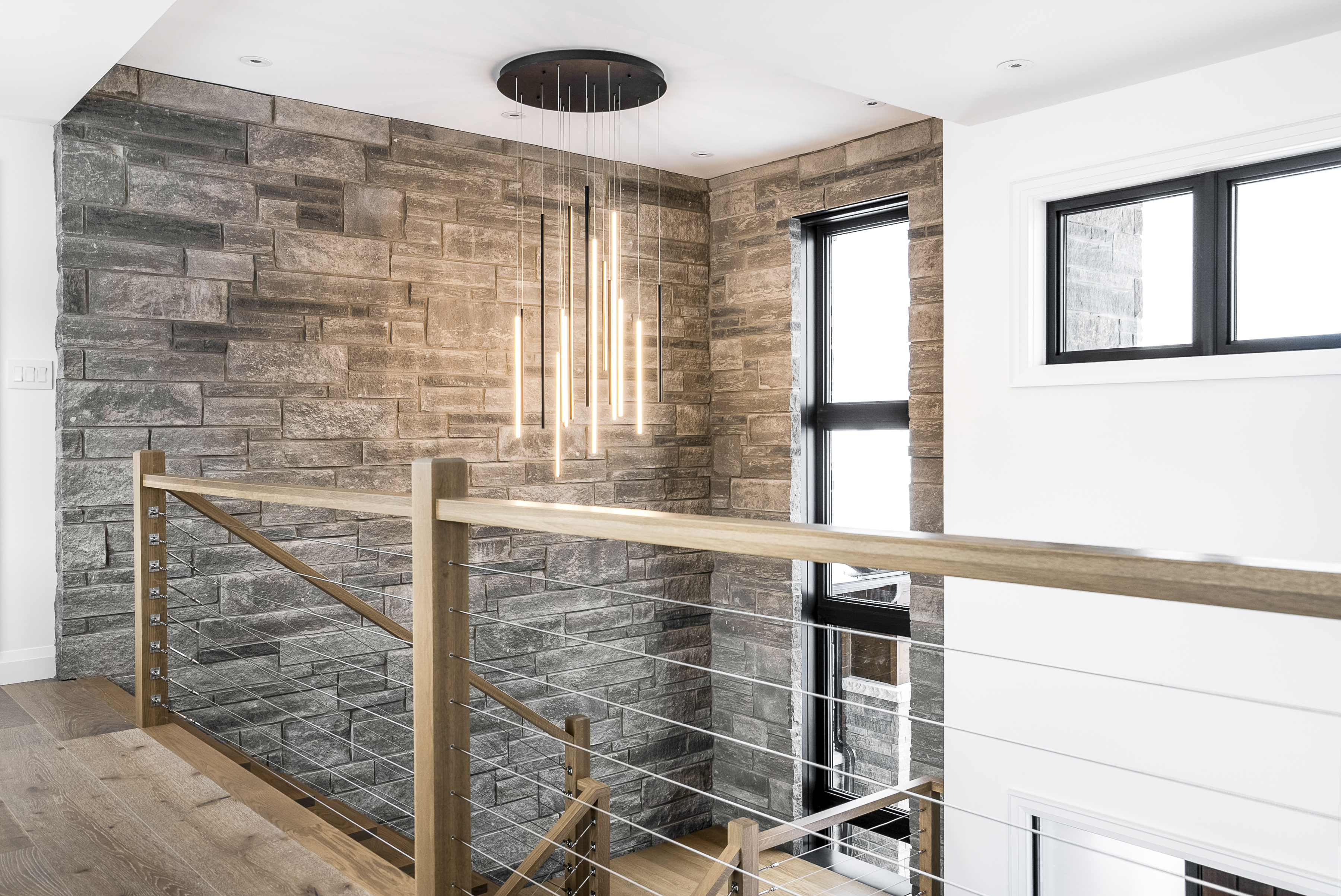
Photo Source: Bezdan
7. How To Install Cable Railing Around Corners?
With corner applications, a double post system is the preferred option. It allows the cable to go through two separate sections thereby minimizing the number of fittings required and lowering the overall project cost. Cables have a maximum bend of 45-degrees and posts should be placed no further than 3.5" apart.
When you're working with a framework that features a single corner post, you can use surface-mount fittings on both sides or combine a through-post and surface mount. A 90-degree corner on the same plane will create an aesthetically pleasing look of continuous cable. If only through-post fittings are used the runs will need to be offset and staggered.
In some cases, a tensioning fitting will be required on each end post. It’s also important to note the maximum run length recommended for the fitting.
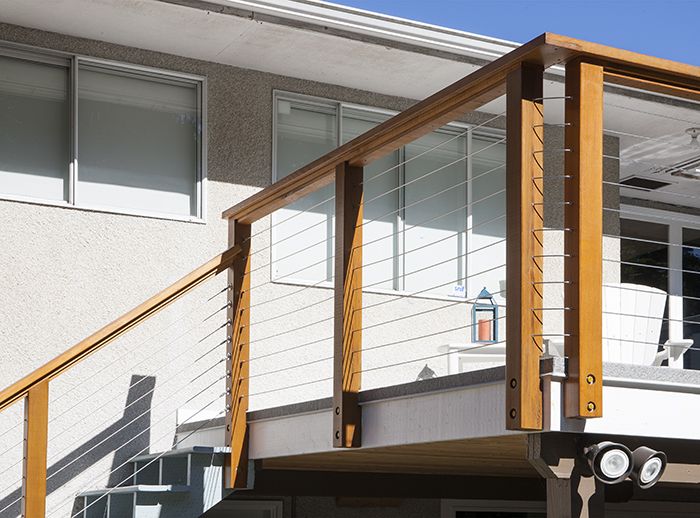
Photo Source: Bezdan
8. How Can I Save Time During a Cable Railing Installation?
Cable railing components are available in a swageless format; this means they can be installed with simple hand tools and there's no need for expensive equipment to secure the cable to the end fittings. Also, if you’re doing multiple or large projects, you can buy individual fittings and cable spools in bulk. There is no need to provide exact measurements for cable to be cut and swaged, saving valuable installation time.
Further, you can use pre-drilled fascia mount stainless steel posts that work with through-post cable fittings for level and stair applications. With no need to drill your own holes you'll be saving time and money.
Photo Source: Bezdan
9. How Do I Clean and Maintain Stainless Steel Cable Railing?
Stainless steel cable railings are highly durable but still need some care. Corrosion from pollutants, salt and chlorides can be a problem so you’ll want an alloy that stands up to the elements, learn more. Bezdan offers metal posts and components in stainless steel alloy 316 and 316L for superior corrosion resistance.
If you want to clean stainless steel metal railings use a soft cloth and clean warm water followed by final rinse with clean water and wipe dry. Bezdan offers stainless steel cleaner and protectant that dissolves minor corrosion, then leaves a protective coating that lasts for months. With regular stainless steel cleaning, care, and maintenance, you'll be enjoying the beauty of your railing for years to come.
Related Articles
- Cable Railing 101: The Basics, Installation Resources & Expert Tips
- Why Cable Railing is Hot Right Now
- Before and After: Witness the Stunning Transformation of An Outdoor Space Thanks to Cable Railing
- 9 Gorgeous Spaces with Indoor Cable Railings